


AI-generated Image
A flash sale goes live at 9 a.m. By 9:12, the support line is ringing nonstop. The live chat queue is backed up, and one rep in Austin can’t reach the rep covering the overnight shift in Manila to hand off an angry customer. Nobody dropped the ball. The phone system just wasn’t built for a business that runs across time zones, channels, and seasons.
That’s the reality for most growing ecommerce brands today. Teams are lean, often fully remote, and stretched thin during Q4 or a BFCM rush. Most owners still treat “phone systems” as an afterthought, something IT deals with, not something that touches revenue. But the way ecommerce brands talk to customers has quietly become core infrastructure, and the companies getting it right are the ones that stopped thinking of communications as a side project.
What UCaaS is and Why Ecommerce Teams are Adopting it Now
Unified Communications as a Service, or UCaaS, bundles voice, video, chat, and SMS into a single cloud platform instead of juggling a desk phone system, a separate video tool, and a help desk plugin that don’t
talk to each other. Everything runs through the internet, which means a rep in Phoenix and a rep in Lisbon can answer the same support line without either one needing a physical phone on a physical desk.
For ecommerce specifically, the fit is almost too obvious to ignore. A typical DTC brand doesn’t have an in-house IT department to maintain an on-premises PBX system, and it doesn’t need one. Its customer service team is distributed, its call volume swings wildly with the calendar, and its support stack already lives in the cloud through Shopify, Gorgias, or Zendesk. Bolting a legacy phone system onto that setup creates more friction than it solves.
That’s exactly why comparing UCaaS vendors before signing a contract matters so much. Pricing models vary widely; some charge per seat and others bundle usage, and a platform built for a 500-person call center doesn’t always flex well for a 12-person ecommerce support team that triples its headcount every November. Brands that shop around and test a few platforms before committing tend to avoid the painful mid-contract switch that comes from picking the wrong fit on the first try.
This isn’t a niche concern anymore. What used to be a back-office decision handled once and forgotten has turned into something leadership teams revisit every year or two, right alongside their payment processor and fulfillment partner.
The adoption numbers explain why that diligence is worth the time. More than 45% of companies now rely on UCaaS as their sole communications platform, up from just under 12% in 2018, according to GetVOIP’s 2026 State of UCaaS report. Another 14% run it in hybrid fashion alongside older on-premises systems. Gartner goes further, projecting that 90% of organizations will depend on cloud platforms for enterprise telephony by 2028, a sharp jump from roughly 30% in 2025.
The Real Ecommerce Pain Points UCaaS Solves
Seasonal volume is the first and most obvious pain point. A brand that handles 200 support tickets a day in June might see 1,200 a day during Black Friday week. A cloud-based system scales seats and lines up or down without anyone driving to an office to plug in new hardware. On-premises systems can’t do that, at least not without a vendor visit and a few days of lead time the business doesn’t have in late November.
Distributed teams create the second pain point. The U.S. Bureau of Labor Statistics’ Current Population Survey puts the national telework rate between 17.9% and 23.8% since it started tracking the metric in October 2022, with roughly 35.1 million Americans working remotely for pay as of April 2026. That’s four to five times the pre-pandemic telework rate of 5-6%. Ecommerce customer service teams are disproportionately remote because the work doesn’t require a physical location, which means the phone system has to work the same way for someone in Ohio as it does for someone in the Philippines.
A distributed team isn’t just a staffing choice for most of these brands, it’s the only way the math works. Renting office space for a support desk that needs to answer calls sixteen hours a day rarely pencils out for a company still finding its footing, so the phone system ends up being the one piece of shared infrastructure holding a scattered team together.
The third pain point is quieter but arguably more damaging: phone number reputation. Carriers increasingly flag outbound business numbers as “Spam Likely,” and once that label sticks, order-confirmation calls, shipping updates, and win-back campaigns stop getting answered at all. The FCC’s February 2025 fact sheet on combatting illegal voice calls cites FTC data showing a median loss of $1,480 per phone-fraud incident, with the average U.S. consumer receiving roughly 13 spam or fraud calls a month. Carriers have gotten aggressive about filtering as a result, and legitimate ecommerce calls sometimes get caught in that net. A UCaaS provider with active number-reputation monitoring catches this before it costs a brand real revenue.
None of these problems are new exactly. What’s new is that they’re now solvable without hiring an IT staff, and ecommerce brands that haven’t caught up are leaving money on the table every single quarter.

AI-generated Image
Security and Compliance Risks Ecommerce Brands Can’t Ignore
Moving customer conversations onto a cloud platform raises the stakes on security in ways a lot of smaller brands don’t think through until something goes wrong. Customer names, order details, payment disputes, and sometimes partial card information pass through chat and voice channels every day. If that data sits on a poorly secured platform, the brand owns the fallout.
Verizon’s 2025 Data Breach Investigations Report found that stolen credentials were the most common initial access vector, used in 22% of breaches, and that 88% of basic web-application attacks involved stolen credentials. A cloud communications platform is a login-protected system like any other, and a weak password policy on the support team’s UCaaS account is just as exploitable as a weak password on the company’s ecommerce admin panel.
Before signing with any vendor, a brand should require encryption for calls and messages in transit, multi-factor authentication on every account, and clear documentation of which compliance certifications the provider holds (SOC 2 is the baseline most serious vendors carry). A provider that can’t answer these questions directly, or that treats them as an afterthought, isn’t ready to handle customer data at scale.
How to Evaluate UCaaS Vendors for an Ecommerce Business
Not every UCaaS platform is built with ecommerce in mind, so the evaluation criteria look a little different than a generic enterprise IT checklist. A few things matter more than others.
Integration with the existing stack comes first. A platform that can’t connect to Shopify, Gorgias, Zendesk, or whatever CRM the team already relies on just creates another disconnected tool. Reps end up toggling between windows instead of seeing order history next to the customer on the line, which slows every single interaction down.
Pricing transparency matters just as much. Plenty of providers quote a low base rate and then tack on per-minute charges, international fees, or “premium feature” add-ons that only show up on the first invoice. Ask for a full breakdown before signing, not after.
The global UCaaS market is projected at roughly $70 to $78 billion in 2026, according to Mordor Intelligence and Fortune Business Insights estimates, with North America holding more than 42% of that share and hosted or cloud deployments expected to account for 67.75% of the total market. That kind of growth has pulled in a lot of vendors chasing the same customers, which is good for pricing pressure but makes the selection process more confusing, not less.
AI features, like call transcription and sentiment analysis, have moved from nice-to-have to standard in most 2026 platforms, and they’re genuinely useful for spotting patterns in why customers call in the first place. Reliability matters too; a dropped call during a high-value sales conversation costs more than the minutes lost.
For a brand without any in-house IT staff, which describes most ecommerce companies under 50 employees, working with a managed provider rather than self-deploying is often the smarter move. A managed partner handles setup, number porting, and ongoing support, so nobody on the marketing or operations team has to become a part-time telecom administrator. This is the gap that enterprise IT solutions by TailWind Voice & Data are built to fill: a brand gets expert deployment and ongoing management without needing to hire for it, which matters a lot when the entire “IT department” might be one person wearing five hats.

AI-generated Image
Keeping Your Whole Tech Stack in Sync
UCaaS doesn’t solve every operational problem on its own, and it shouldn’t be treated as a standalone fix. It works best as one piece of a broader system that keeps a lean team organized as the business scales.
Documentation is one piece of that system. When a support rep hands off a call mid-shift, having clear, shared notes matters as much as the call quality itself. We’ve covered this in our piece on streamlining day-to-day team documentation, which looks at the tools that keep handoffs from falling apart when teams are spread across time zones.
Good documentation only helps if the rest of the customer’s history is just as easy to find. That’s where a second piece of the puzzle comes in: making sure every channel a customer touches tells the same story.
Channel consistency is another piece. A customer who emails on Monday and calls on Thursday shouldn’t have to repeat their whole story twice. Our guide to keeping customer communication consistent across every sales channel digs into the software that ties these touchpoints together so nothing gets lost between inboxes.
None of this needs to run entirely on human effort, either. A growing share of the triage work can happen before a rep ever picks up the call or opens the chat window.
AI is increasingly part of the equation too, not as a replacement for human reps but as a way to triage volume before it reaches them. We’ve written about AI-driven tools for handling customer interactions, and the brands using them well tend to free up their human reps for the conversations that actually need a person.
None of this works in isolation. A UCaaS platform that doesn’t talk to the documentation system, the helpdesk, or the AI triage layer just becomes another silo, which defeats the entire point of consolidating communications in the first place.
What Is EcomBalance?
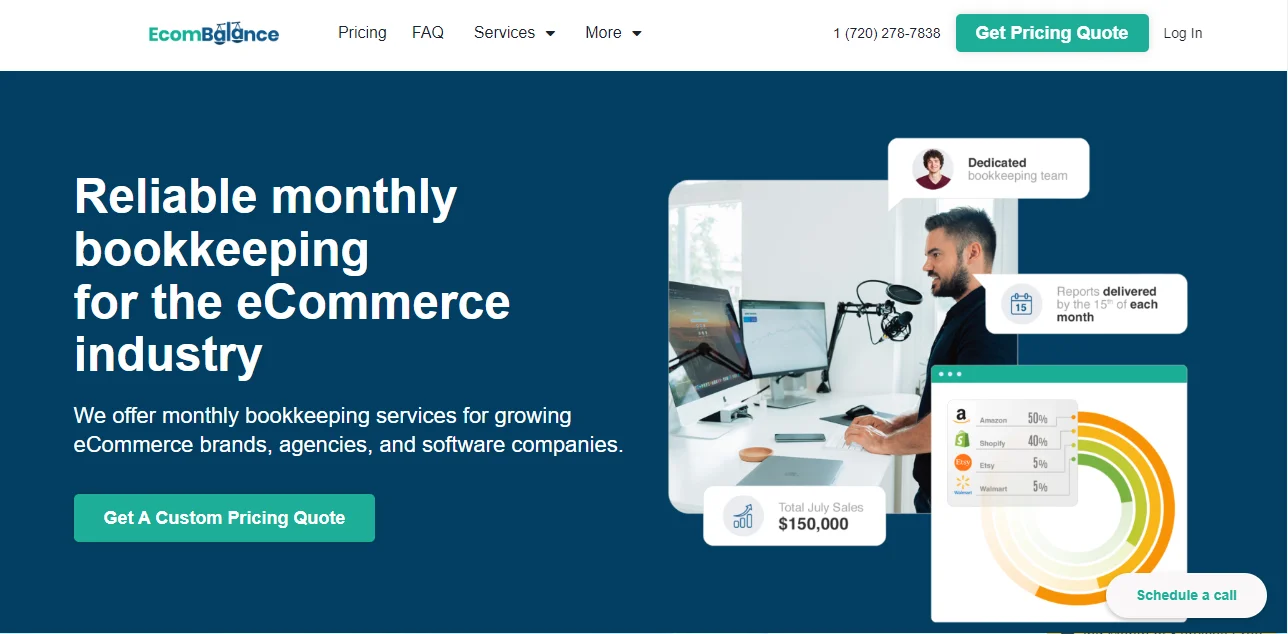
EcomBalance is a monthly bookkeeping service specialized for eCommerce companies selling on Amazon, Shopify, eBay, Etsy, WooCommerce, & other eCommerce channels.
We take monthly bookkeeping off your plate and deliver you your financial statements by the 15th or 20th of each month.
You’ll have your Profit and Loss Statement, Balance Sheet, and Cash Flow Statement ready for analysis each month so you and your business partners can make better business decisions.
Interested in learning more? Schedule a call with our CEO, Nathan Hirsch.
And here’s some free resources:
- Monthly Finance Meeting Agenda
- 9 Steps to Master Your Ecommerce Bookkeeping Checklist
- The Ultimate Guide on Finding an Ecommerce Virtual Bookkeeping Service
- What Is a Profit and Loss Statement?
- How to Read & Interpret a Cash Flow Statement
- How to Read a Balance Sheet & Truly Understand It
The Bottom Line
UCaaS stopped being an enterprise-only purchase a while ago. For ecommerce brands running lean, remote teams through unpredictable seasonal swings, it’s become the communications backbone that keeps support, sales, and operations connected, often without a single dedicated IT hire on staff.
The brands that get this right treat vendor selection the same way they’d treat choosing a fulfillment partner or a payment processor: carefully, with real comparison shopping, and with an eye toward what the business will need a year from now, not just what fits this quarter’s budget. Skip that process, and a brand risks locking into a platform that can’t handle its next growth spurt, or worse, one that quietly tanks its outbound call answer rate without anyone noticing until Q4 revenue numbers come in soft.


