



Bookkeeping is one of the most vital functions in any organization. It ensures that financial data is accurate, organized, and ready for decision-making. Yet, as the financial industry evolves, bookkeepers are discovering that traditional skills alone are not enough to keep pace.
Today’s businesses require professionals who go beyond recording transactions, they need experts who can analyze data, forecast trends, and guide strategic decisions. For many bookkeepers, a role that once focused primarily on data entry and reconciliation now requires analytical thinking, digital fluency, and financial insight.
As companies expand and adopt new technologies, professionals with advanced education are better positioned to guide financial decisions and influence growth. Earning an advanced business degree, such as an online MBA in finance, helps bookkeepers remain competitive in the job market.
Why Bookkeeping is the Foundation of Financial Success
Every successful business depends on clear and accurate bookkeeping. It provides the data that drives financial reporting, compliance, and strategy. Without organized records, companies risk making decisions based on incomplete or inaccurate information.
Bookkeepers manage tasks such as tracking transactions, reconciling accounts, processing invoices, and maintaining financial records in compliance with regulatory requirements. Their work supports accountants, managers, and auditors who rely on precise data to evaluate performance.
However, the profession has evolved significantly. Technology and automation have simplified many bookkeeping processes, shifting the focus toward analysis and insight. As a result, bookkeepers who understand financial strategy can offer greater value to employers and clients.
The Shifting Landscape of Bookkeeping Careers
In today’s business world, bookkeepers are expected to do more than record numbers. They often assist in budgeting, forecasting, and financial analysis. As digital tools continue to advance, professionals who can interpret financial data and contribute to decision-making are in high demand. For job seekers preparing for finance and bookkeeping roles, an AI interview tool like Parakeet AI can be especially useful, offering real-time answers to interview questions, instant feedback on answers, and practical support to help candidates respond more confidently in live interviews.
This shift creates both challenges and opportunities. Traditional bookkeeping remains essential, but employers increasingly seek individuals who understand broader business operations. A strong grasp of finance allows bookkeepers to contribute meaningfully to company strategy rather than focusing solely on data entry.
Earning an online MBA in finance is one way to bridge this gap. It builds on bookkeeping expertise while introducing advanced knowledge in areas like financial management, investment analysis, and leadership.
How an MBA Expands Financial Understanding
A Master of Business Administration program provides a comprehensive view of how businesses function. For bookkeepers, this means learning not just how to record financial activity but also how to evaluate it within a larger economic context. Students study subjects that strengthen both analytical and leadership capabilities.
Key skills developed through an MBA in finance include:
- Financial strategy: Understanding how financial decisions influence growth and sustainability,
- Data-driven analysis: Interpreting reports to identify patterns and opportunities,
- Investment and risk management: Learning how to allocate resources efficiently while minimizing exposure,
- Corporate finance: Exploring how organizations raise capital and manage assets,
- Leadership and communication: Building the confidence to present financial insights and guide teams effectively.
These skills help bookkeepers transition into roles where they can advise management, oversee financial planning, and support organizational growth.
How an Online MBA Fits Working Professionals
Many professionals hesitate to pursue graduate degrees because of time constraints or work commitments. An online MBA in finance offers flexibility, enabling students to balance education while maintaining their professional commitments.
Online programs offer the same academic rigor as on-campus courses but with added convenience. Students can access lectures, discussions, and assignments from anywhere, making it easier for full-time professionals to continue working while studying.
The curriculum typically combines finance, leadership, and business management topics. Students learn through real-world case studies and interactive coursework that mirrors challenges faced by modern organizations. This structure allows them to apply lessons directly to their current roles, gaining immediate benefits while working toward long-term goals.

Evolving Beyond Traditional Bookkeeping Tasks
One of the most significant benefits of pursuing advanced education is the opportunity to move beyond traditional bookkeeping responsibilities. With an MBA, professionals gain the tools to contribute strategically to the organizations they serve.
Bookkeepers with business management knowledge can expand into roles such as financial analyst, controller, or finance manager. They can participate in high-level decision-making, helping businesses evaluate budgets, assess risks, and develop plans for future growth.
This transition also enhances long-term career stability. As automation handles repetitive tasks, strategic financial analysis and leadership remain highly valuable human skills.
Bridging the Gap Between Bookkeeping and Strategic Finance
Bookkeeping focuses on accuracy and compliance, but finance focuses on growth and direction. An MBA helps professionals understand how these two elements connect. For example, accurate records provide the foundation for budgeting and forecasting, but interpreting those numbers requires a deeper financial perspective.
Through advanced coursework, students learn how to transform financial data into actionable insights. This analytical mindset empowers bookkeepers to anticipate business needs, identify inefficiencies, and support executive decisions. The result is a stronger connection between day-to-day accounting work and overall business strategy.
These core advantages of integrating finance knowledge turn bookkeepers into valuable business partners who contribute at every level of an organization:
- Informed decision-making: A deeper understanding of finance improves accuracy in strategic planning.
- Improved efficiency: Graduates can design systems that streamline operations and enhance accuracy.
- Stronger communication: Financial professionals who can translate numbers into clear business language build trust across departments.
- Career mobility: Expanded knowledge opens doors to management and executive roles.
- Confidence in leadership: MBA training fosters the ability to guide others and make complex financial judgments.
Building Strategic Thinking Skills
MBA programs specializing in finance blend theory with practical application. Students explore financial modeling, risk analysis, and global markets to understand how money moves through different types of organizations.
Typical coursework includes subjects such as managerial accounting, corporate finance, business analytics, and strategic management. These courses equip graduates to evaluate financial factors, both internal and external, that influence an organization’s performance.
Entrepreneurs and small business bookkeepers especially benefit from this broader perspective. They learn how to identify growth opportunities, allocate capital effectively, and prepare for long-term expansion.
Adapting to Technological Advances in Accounting
The financial industry is rapidly evolving with the rise of automation, artificial intelligence, and data analytics. These tools have transformed the way bookkeepers manage transactions and analyze data. An MBA program helps professionals adapt to these changes by teaching how to leverage technology strategically.
Students learn how to interpret data from advanced accounting software and use financial analytics to forecast trends. They also explore ethical and regulatory considerations that come with digital transformation. This understanding ensures that graduates can navigate the modern financial environment confidently and responsibly.
The Leadership Edge for Bookkeepers
Leadership extends beyond the executive suite. Bookkeepers who take initiative and communicate financial insights effectively play a key role in guiding organizational success. An MBA cultivates these leadership skills, teaching how to motivate teams, manage projects, and align financial goals with overall company strategy.
This expanded perspective transforms professionals from technical experts into trusted advisors. Bookkeepers who understand both finance and management can bridge the gap between operational details and strategic vision, becoming essential contributors to sustainable business growth.
Networking and Professional Growth Opportunities
Another advantage of pursuing an advanced degree is access to professional networks. MBA programs connect students with peers, faculty, and industry experts who share insights and opportunities. These relationships often lead to collaborations, mentorships, or career advancement after graduation.
For bookkeepers transitioning into broader roles, networking provides exposure to best practices across industries. It also creates opportunities to learn from others who have successfully combined accounting expertise with strategic financial management.
Boosting Earning Potential With Advanced Education
An MBA not only enhances knowledge but also increases professional value. Graduates often qualify for higher-paying positions and have greater leverage in salary negotiations. Employers recognize the leadership, analytical, and communication skills that MBA graduates bring to their roles.
For bookkeepers, this added education can mean moving from support roles to decision-making positions. It may also lead to career shifts into areas like corporate finance, consulting, or business development. The combination of financial acumen and managerial insight makes MBA-trained professionals indispensable in a competitive job market.
Long-Term Career Evolution for MBA Finance Graduates
The demand for financial professionals continues to grow as businesses expand globally and navigate increasingly complex markets. Bookkeepers who pursue an MBA position put themselves at the forefront of this evolution. Their ability to combine technical accuracy with strategic insight makes them well-suited for leadership roles in any sector.
Over time, professionals with advanced financial education often find themselves guiding corporate strategy, advising on investments, and managing large-scale financial operations. This long-term adaptability ensures career resilience in a changing economy.
Preparing Financial Professionals for the Future
In today’s business world, bookkeeping is no longer just about numbers. It is about understanding the story those numbers tell. Professionals who expand their financial knowledge through an online MBA in finance gain the ability to connect day-to-day operations with long-term strategy.
The combination of practical accounting experience and advanced financial education creates well-rounded professionals capable of driving business success. With a strong foundation in finance, leadership, and analytics, MBA graduates are prepared to shape the future of the industry and their own careers.
What Is EcomBalance?
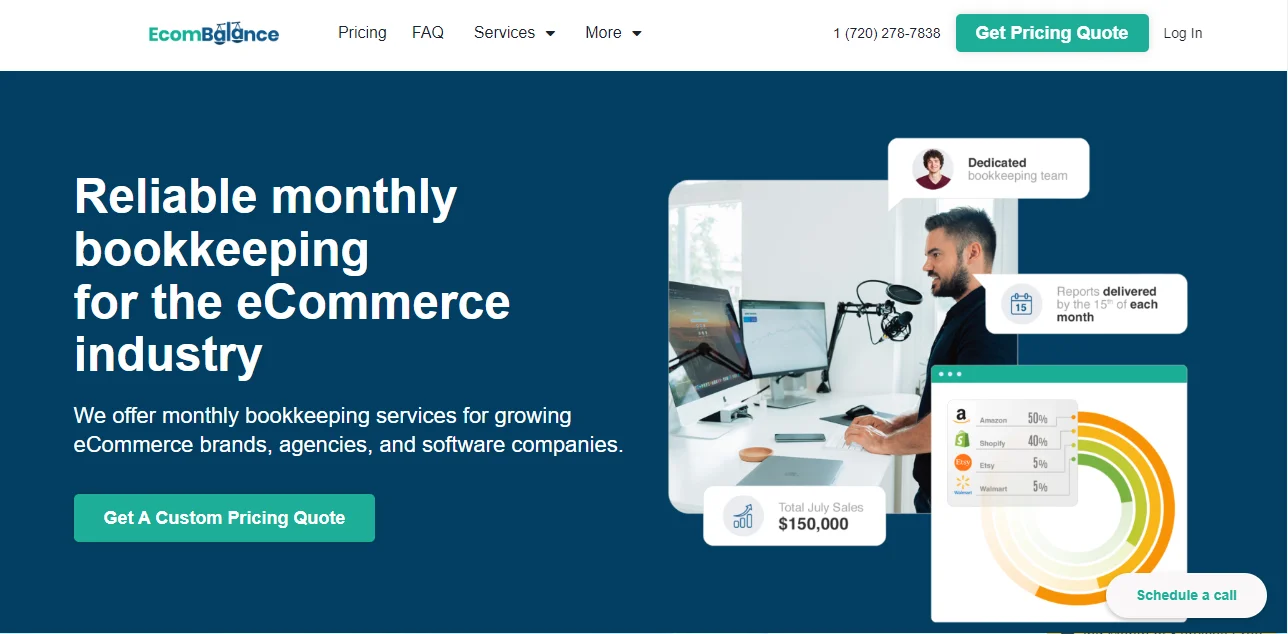
EcomBalance is a monthly bookkeeping service specialized for eCommerce companies selling on Amazon, Shopify, eBay, Etsy, WooCommerce, & other eCommerce channels.
We take monthly bookkeeping off your plate and deliver you your financial statements by the 15th or 20th of each month.
You’ll have your Profit and Loss Statement, Balance Sheet, and Cash Flow Statement ready for analysis each month so you and your business partners can make better business decisions.
Interested in learning more? Schedule a call with our CEO, Nathan Hirsch.
And here’s some free resources:


