


Growing an eCommerce business brings challenges that are easy to overlook when you are focused on increasing sales and reaching more customers. One of the biggest is finding enough space to support that growth.
What starts as a small inventory setup in a home office, garage, or spare room can quickly become difficult to manage as products, packaging materials, equipment, and supplies continue to increase. Before long, packing a single order means moving three boxes first, and you’re reordering stock you already have because you can’t find it.
Needing more space is often a sign that your business is moving forward. The key is recognizing when your current setup no longer supports your goals, and knowing your options before you commit to a bigger move. This guide covers the warning signs, how inventory growth affects your cash flow, and how to compare eCommerce inventory storage options without losing control of daily operations.
The Workspace Challenges that Come With eCommerce Growth
When most entrepreneurs think about scaling an online store, they usually focus on marketing campaigns, customer acquisition, product development, and revenue goals. While these areas are essential, the physical side of running an eCommerce business deserves just as much attention.
Inventory, shipping supplies, returns, equipment, and seasonal products all take up space and require organization. As these items continue to build, your workspace can slowly shift from a productive environment into a storage area that makes everyday tasks more difficult.
One way to measure the problem is to time 20 consecutive orders, from pulling the first item to sealing the box, then repeat the test a month later. If the average time per order is rising while your products and packaging stay the same, your workspace is costing you labor. Multiply the extra minutes per order by your monthly order volume and your hourly labor cost, and you have a rough monthly figure for what the clutter is costing you.
Why Inventory Growth can Create Financial Pressure
Inventory growth is usually a positive sign. It means your business is preparing to meet customer demand and keep products available when people want to buy them. However, inventory also represents money invested in your business. Poor management can create financial challenges even when sales are increasing.
Many growing eCommerce brands underestimate how closely inventory decisions are connected to cash flow. Products sitting unused on shelves are not just taking up physical space. They are also tying up money that could be invested in marketing, new products, or other areas of growth.
Two numbers make this visible. Inventory turnover is your cost of goods sold divided by your average inventory value. It tells you how many times a year you sell through your stock. Days inventory outstanding is 365 divided by turnover. It tells you roughly how long a dollar spent on inventory waits before it comes back as a sale.
Say a store has $120,000 in annual cost of goods sold and keeps $30,000 of inventory on hand. That is a turnover of 4, or about 91 days of inventory. If better purchasing raised turnover to 6, the store would need only about $20,000 of stock. That frees roughly $10,000 in cash before counting any storage savings.
Stock also costs money while it waits: storage, insurance, shrinkage, damage, and the risk of going out of season. The slower an item moves, the more of these costs it absorbs and the less its margin is worth. Fast sellers show you where to put purchasing money. Slow movers show you where cash is stuck, and often what is eating your shelf space.
Increasing sales is only part of the picture. Understanding how inventory, bookkeeping, and planning work together tells you whether growth is actually improving your financial position.

Building Scalable Systems Before Growth Becomes Overwhelming
Many business owners wait until they experience problems before improving their systems. It is easy to think that organization can happen later when things slow down, but growing businesses rarely have extra time available once demand increases.
Creating simple, repeatable processes early can make expansion much easier. This does not mean you need complicated technology or expensive systems. It means creating a structure that helps you understand what you have, where it is located, and how it moves through your business.
Start with the basics:
- Give every product a readable SKU code, such as category-product-variant (TEE-LOGO-BLK-M), so anyone can identify an item without looking it up.
- Give every item a fixed home. Label shelves and bins with simple location codes and record each SKU’s location in your inventory system, so picking no longer depends on one person’s memory.
- Count a small group of SKUs each week instead of shutting down for one big annual count. Start with your fastest-moving and highest-value items, and discrepancies get caught while they are still easy to trace.
- Check every delivery against the purchase order, then label and shelve it before any of it is sold. Most inventory errors enter at the receiving door.
- Use inventory software that syncs with your sales channels and your accounting software, so your stock count and your balance sheet agree.
These steps may seem simple, but they can have a huge impact on a company’s efficiency. Every growing business will face new obstacles. The goal is a foundation that lets you handle them without getting overwhelmed.
Finding Flexible Solutions When your Current Space is No Longer Enough
Eventually, many eCommerce businesses reach a point where their current workspace cannot keep up with their growing needs. You may have products filling every corner, shipping supplies spilling into your work area, or equipment stored wherever it fits.
At this stage, many entrepreneurs assume the only solution is moving into a larger office or warehouse. Expanding your physical location may make sense for some companies, but it is not always the most practical first step. A lease is a fixed cost to take on while volume is still climbing. Between reorganizing what you have and signing a lease, there are two common middle options. Offsite commercial storage gives you rented space for stock you don’t need daily. You keep shipping from your own location. A third-party logistics provider (3PL) stores your inventory and ships orders for you. In exchange, you pay receiving, storage, and per-order fees.
Offsite storage suits stagnant items that take up room. That includes seasonal products, bulk packaging, archived business records, and overflow inventory you replenish from in batches. For sellers in California, California commercial storage from Corodata is one example. It is offered on month-to-month agreements, with online inventory tracking and scheduled retrieval or delivery of stored items. The limit to plan around is that offsite storage is not fulfillment. It keeps your main workspace free for daily picking and packing. It is not for products you pull every hour.
The simplest way to compare any of these options is cost per unit. Divide each option’s monthly cost by the number of units it would hold or ship. Then compare that figure with the gross margin on the products involved. Sometimes storage eats a meaningful share of a slow product’s margin. In that case, the answer may be to stock less of it rather than pay for more space.
A company might be preparing for peak season, expanding its product range, or trying to regain control of its workspace. In each case, the right storage strategy makes the transition much smoother.
How Financial Tracking Supports Smarter Growth Decisions
Physical organization and financial organization often go hand in hand. When you understand what is happening financially, it becomes easier to make decisions about inventory, space, and future investments.
Accurate bookkeeping gives business owners a clearer view of their current situation. It helps answer important questions such as whether inventory levels are supporting growth, whether expenses are increasing too quickly, and whether the business has enough financial flexibility to invest in new resources.
For eCommerce companies, financial tracking is not just about recording past transactions. It is also about preparing for future opportunities.
When you have reliable financial information, you can make decisions with greater confidence. Instead of guessing whether your business is ready for expansion, you can use real numbers to guide your next steps.
Growth becomes much less stressful when you understand both the financial and operational sides of your business.
Preparing Your eCommerce Business for the Next Stage of Growth
Every successful business reaches a point where the strategies and systems that worked in the beginning need to evolve. The inventory process that worked when you had a few dozen orders each month may not be effective when you are handling hundreds or thousands.
Recognizing this change is an important part of becoming a stronger business owner.
Take time to evaluate your current operations. Is your workspace helping you work efficiently, or is it creating additional challenges? Are your inventory systems making it easier to manage growth, or are they slowing down your progress?
Small improvements can create significant results. Better organization, stronger financial tracking, and smarter space planning can help you build a business that is ready for the future.
Growth should feel exciting, not exhausting. When you create systems that support your goals, you give yourself the freedom to focus on building your brand instead of constantly solving avoidable problems.
Create Space for Growth Without Losing Control
Outgrowing your workspace is a challenge that many eCommerce businesses experience as they become more successful. It is a natural part of expansion, but it requires thoughtful planning to manage effectively.
By improving inventory organization, maintaining accurate financial records, and creating a workspace strategy that supports your goals, you can continue growing without allowing daily operations to become chaotic.
You do not need to make every change at once. Growth happens step by step, and the businesses that succeed are often the ones that take the time to build strong foundations along the way.
Your eCommerce business has already come a long way. The next stage is about creating the structure, systems, and space needed to help it continue moving forward.
What Is EcomBalance?
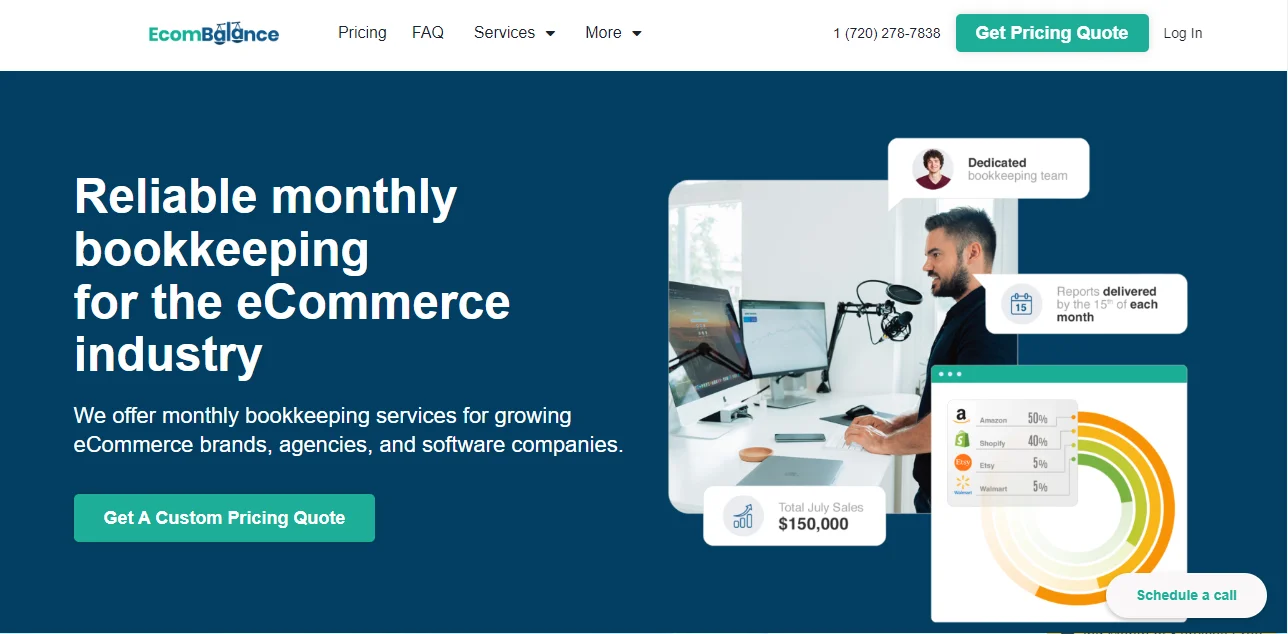
EcomBalance is a monthly bookkeeping service specialized for eCommerce companies selling on Amazon, Shopify, eBay, Etsy, WooCommerce, & other eCommerce channels.
We take monthly bookkeeping off your plate and deliver you your financial statements by the 15th or 20th of each month.
You’ll have your Profit and Loss Statement, Balance Sheet, and Cash Flow Statement ready for analysis each month so you and your business partners can make better business decisions.
Interested in learning more? Schedule a call with our CEO, Nathan Hirsch.
And here’s some free resources:
- Monthly Finance Meeting Agenda
- 9 Steps to Master Your Ecommerce Bookkeeping Checklist
- The Ultimate Guide on Finding an Ecommerce Virtual Bookkeeping Service
- What Is a Profit and Loss Statement?
- How to Read & Interpret a Cash Flow Statement
- How to Read a Balance Sheet & Truly Understand It
Huge thanks to Corodata for collaborating on this post!